
Digital fundraising has come a long way since John McCain’s 2008 campaign, when a few emails a week were standard and political texting barely existed.
By 2024, President Trump’s campaign was sending a large number of emails every week, often multiple times a day.
After the digital fundraising boom of 2020, campaigns everywhere tried copying the presidential playbook: more emails, more texts, and more urgent appeals.
NEWS FLASH: Presidential tactics don’t guarantee presidential results.
Trump could send a midnight fundraising email warning that Democrats were coming after him and raise money. Joe Schmoe running for the Alaska Legislature can’t create that same urgency when half his audience doesn’t even know who he is.
Somewhere along the way, the industry became obsessed with how many messages it could send instead of how effectively it could engage supporters and raise sustainable revenue.
And that’s where we believe digital fundraising needs to evolve.
Digital Fundraising Is More Than a Transaction
Not every voter is a donor, but a $5 or $25 contribution from someone in a candidate’s district or state means something. They’re putting their own money behind someone they believe in, and that kind of support shouldn’t be taken for granted.
Candidates who have breakout moments like Sarah Palin’s 2008 convention speech or Elise Stefanik’s 2019 impeachment hearings can capitalize nationally. But national fundraising can become an expensive, exhausting effort without one.
Meanwhile, that $5 donor back home could become a repeat contributor, volunteer, or advocate. They’re someone worth keeping engaged long after their first donation.
But how do you expect to build that relationship when you’re sending 10 fundraising emails a day, manufacturing emergencies, or texting someone who already opted out?
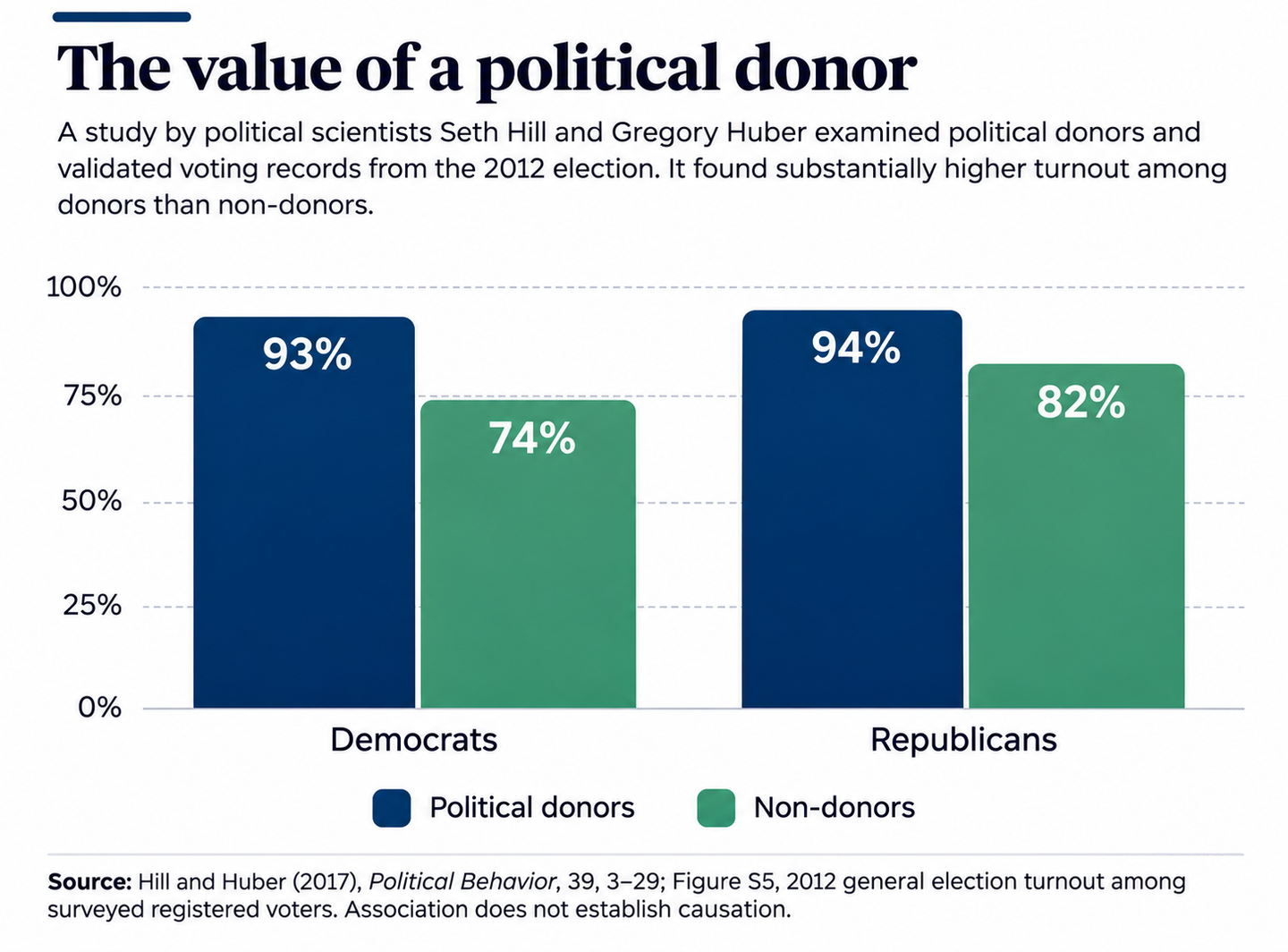
If all you see is another $5 donation, you’re missing the bigger picture. We need to evolve by going back to basics, but with the advantage of the new tools we’ve been given.
Don’t Blame the Tools, Blame the Strategy
We’ve tested it: Sending more emails doesn’t automatically mean raising more money, and chasing a few extra dollars today can cost a campaign valuable long-term donor support.
When subscribers get the same tired “URGENT MEMO” and “VOTER VERIFICATION” appeals over and over, they stop clicking, start unsubscribing, or mark you as spam. Deliverability suffers, donor retention declines, and your lists lose their value.
And the damage doesn’t stop after an unsubscribe. Your email and texting house files are campaign assets that take time and money to build properly. Poor acquisition practices, questionable subscriber consent, excessive messaging, and ignored opt-outs will hurt deliverability, create compliance problems, and can damage a campaign’s reputation. You might squeeze another $5 out of someone, but how much are you losing when they hit that unsubscribe link?
Respect your donors by respecting their inboxes.
The 1000X matches, manufactured emergencies, donor shaming, misleading fundraising gimmicks, and deceptive requests to “reduce” text messages need to end. These tactics might generate a quick donation, but what happens when supporters stop trusting anything you send?
Republicans aren’t going to close the digital fundraising gap with Democrats by burning through the very people they depend on to fund their campaigns.
The problem isn’t that we’ve run out of ways to reach donors. It’s that we’ve given too many of them a reason to stop listening.
If Everything Is Urgent, Nothing Is Urgent
Somewhere along the way, political campaigns forgot the art of a good newsletter. If every email is another apocalyptic plea for $5, how are voters supposed to know what you stand for, what you’ve accomplished, or what you’ll actually do if elected?
We believe this is costing Republican campaigns valuable support and potentially millions in fundraising. Too many campaigns have traded meaningful conversations with voters for manufactured outrage, recycled talking points, and another desperate dollar ask. Meanwhile, Democratic campaigns have shown how effective issue-based messaging, storytelling, and genuine engagement can be.
How did we get here? There aren’t enough real-world fundraisers involved in digital. Too many digital fundraising programs are run like copywriting factories, where the next rage-bait subject line matters more than the candidate’s actual message. The focus shifted to generating transactions instead of building relationships, and somewhere along the way, the candidate got lost.
How can we make the situation better?
Bring back newsletters people actually want to read. Share updates from the campaign trail, explain where candidates stand on important issues, send videos without a dollar ask, and give supporters opportunities to share their opinions without hitting a donation page.
Arena created the email below for Senator Dan Sullivan’s reelection campaign that reflected who he is: policy-driven, results-driven, and personal. Whether in Alaska or the Lower 48, subscribers could understand his message and why it mattered. The fundraising email performed well because we knew our audience and spoke to them about the issues they cared about.
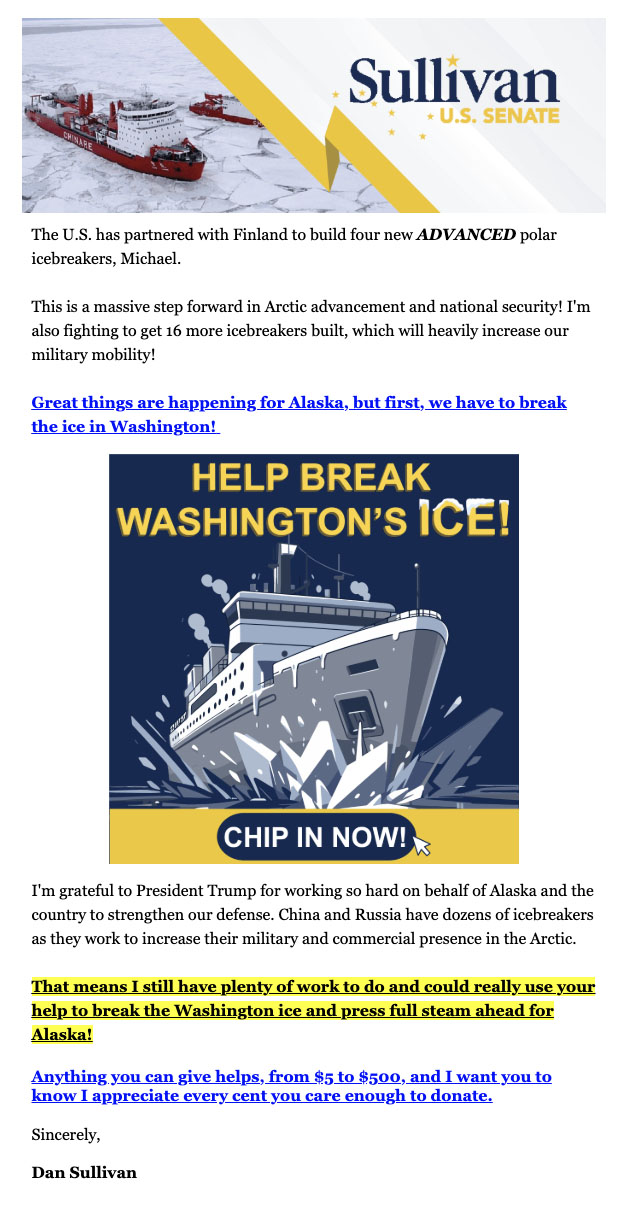
You didn’t see another email like it in your inboxes because it wasn’t canned, repeated, or vague.
In another example (below), an email to North Carolina voters used relevant information to invite feedback. After respondents submitted their answers, they were offered an opportunity to donate; contributing was not required to participate.

If the only time voters hear from you is when you need urgent money with no callback to the issues they care about, don’t be surprised when they stop responding.
Yes, You’re Being Gemini’d, ChatGPT’d, and Claude’d
Your next donor or supporter is likely going to Google you. Or they might ask ChatGPT who you are, what you’ve accomplished, and where you stand on the issues.
If your campaign website is just a biography and a donation button, you’re already making their research harder.
The candidate must be fully invested and put in the work, too.
Publishing substantive policy positions, writing op-eds, and sharing regular campaign updates help build organic support while giving search engines and AI tools credible information to work with.
Think about it. If you’re spending money to acquire prospective donors, writing emails, and running ads to get people interested in your race, the last thing you want is for those people to do their own research and find outdated information, unanswered questions, or nothing but coverage of your opponent.
You can’t expect people to invest if the candidate isn’t out there promoting themselves.
The Limit Does Not Exist
A holistic digital campaign goes well beyond CTV/OTT. Those channels matter, but if your digital strategy begins and ends with putting television commercials on streaming services, you’re leaving an enormous amount of opportunity on the table.
According to Pew Research Center, 84% of American adults use YouTube, 70% use Facebook, 51% use Instagram, 37% use TikTok, and 26% use Snapchat. That’s where millions of Americans are consuming content, following conversations, and engaging with the world around them. A campaign must have a meaningful presence here.
Email, texting, organic social media, and engagement advertising give campaigns something a 30-second commercial can’t provide on its own: direct conversations, immediate feedback, rapid-response messaging, and opportunities to turn attention into meaningful engagement.
You can’t build a complete digital campaign by doing only half the work.
Revenue Isn’t the Only Metric That Matters
Anyone can brag about gross fundraising numbers. But raising a million dollars doesn’t mean much if you spent $1.2 million to get there in an election year. The cost of building your list in an off year and spending more to prospect will pay off in the election year in your return on investment.
We’ve had campaign after campaign come to us shocked to discover their previous vendor spent more than they raised, with little explanation of where the money went or what they actually got in return.
Every real fundraiser knows the Golden Rule: NET, NET, NET.
Your digital fundraising program should be an open book, and every campaign should be asking these questions monthly:
- What did we actually NET?
- How many donors are giving more than once?
- How many recurring donors do we have, and what are they generating monthly?
- Are unsubscribes and spam complaints increasing?
- Are our emails reaching inboxes and generating engagement?
- Is our donor list growing, shrinking, or just replacing the people we’re losing?
- Are clicks, conversions, and revenue improving?
If your vendor is making more money than your campaign and you don’t know until it’s too late, it’s time to start asking questions.
The Arena Approach: One Connected, Transparent Digital Operation
A campaign’s fundraising, advertising, creative, communications, and voter engagement should all work together. When they don’t, money gets wasted, opportunities get missed, and voters receive a confusing message about who the candidate really is.
At Arena, we believe in doing the work and doing it right
We don’t promise the world to win a contract. We don’t hide behind inflated fundraising numbers or build programs around deceptive tactics. No fake matches, manufactured emergencies, pre-checked recurring donations, misleading surveys, or endless upsells designed to trick another dollar out of supporters.
We build realistic fundraising programs around the candidate, their message, and their supporters. Our content is original, relevant, and written to sound like the candidate, rather than another recycled fundraising appeal begging for $5.
For almost two decades, Arena has done the work that makes a complete digital campaign run. We build the programs, create the content, manage the data, execute the advertising, and handle the unglamorous details that other firms overlook. Yes, we do CTV and OTT, but we refuse to confuse buying impressions with building a digital operation.
Our clients deserve to know what they’re raising, what they’re spending, and what they’re actually keeping. They deserve honest advice, realistic expectations, and a team that works alongside them rather than operating as another disconnected vendor.
We believe the future of digital fundraising belongs to those willing to earn donors’ trust, protect their investment, and do the work the right way.
Mikey Swetz is a fundraising veteran with more than 15 years of experience. He began his career on Linda McMahon’s 2012 U.S. Senate campaign before spending three years fundraising for campaigns and the State Party in Connecticut and three years in New Hampshire. He later served as the National Field Finance Director at the RNC for two election cycles.
In 2020, Mikey joined Arena Mail + Digital to build its direct response and fundraising operation from the ground up. Over the past six years, he has helped campaigns rebuild struggling fundraising programs, develop meaningful donor relationships, and integrate fundraising into their broader digital strategies. His approach focuses on honest fundraising, creative messaging, and delivering measurable results.